How Mario Kart Tour Nudges Players Toward Paid Gambling
 +20 XP
Case study
How Mario Kart Tour Nudges Players Toward Paid Gambling
A longtime Mario Kart fan plays the mobile version for three weeks and slowly discovers that winning depends on buying randomized items. This story takes apart the six nudges behind that loop, from time-limited tours to a daily cap on coins, and what an honest version would change.
+20 XP when you reach the endWhat you will learn
- Recognize loot box mechanics and the psychology that powers them
- See how extra currencies hide what things really cost
- Tell a healthy exit point from a hard stop that pushes spending
Scroll to follow the story. The screen changes with you.
Based on the learnings from Growth.Design: 6 Ways Mario Kart Tour Triggers You Into Gambling Your Money, presented in our own format.

Step 1 of 11
- The fun part
01
The setup
The racing itself is as fun as fans remember.
A player who grew up with Mario Kart installs the mobile release and spends three weeks with it. On track, it is quick, colorful and satisfying: drift, collect items, finish first.
TakeawayA strong core experience earns the player's trust, which the business model can then spend or protect.
 Constant noise
02
First impression
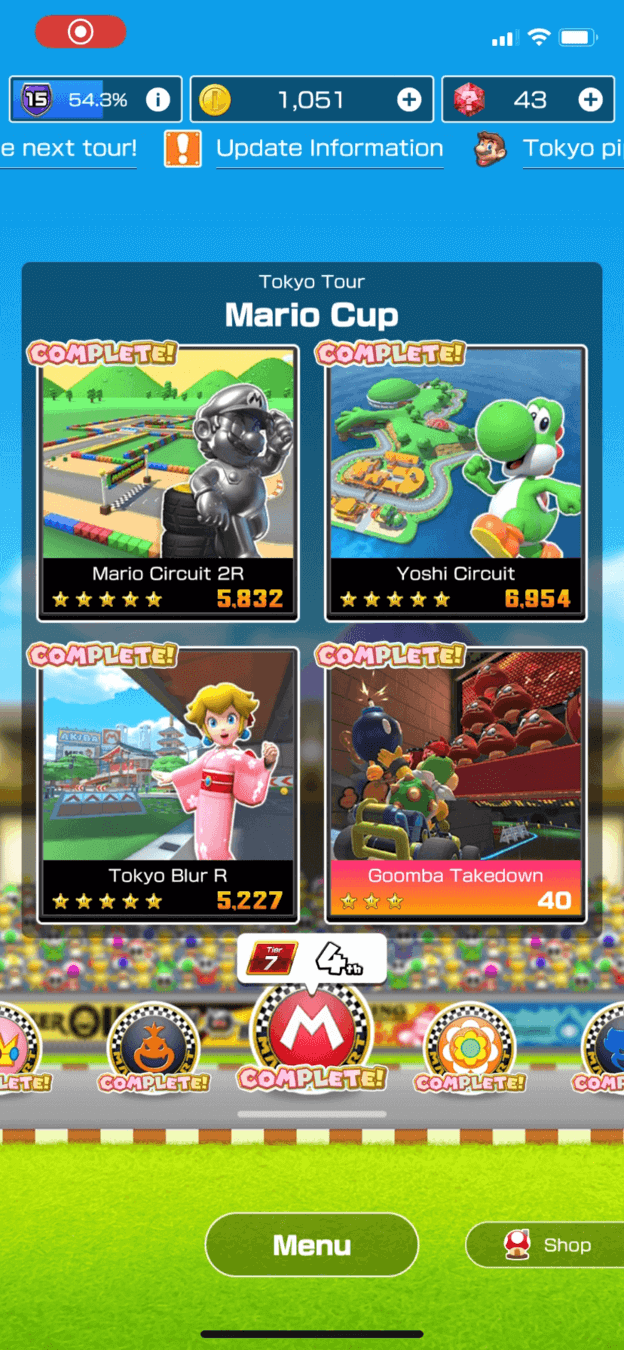
Between races, the home screen is crowded with counters and banners.
A ticker banner, three currency counters, tour cups, cup scores and a row of badges all compete for attention. The noise is not accidental: it keeps attention on collecting and on the next tour.
TakeawayVisual clutter can be a choice that serves the business rather than the player.
 4,000 points behind
03
The goal
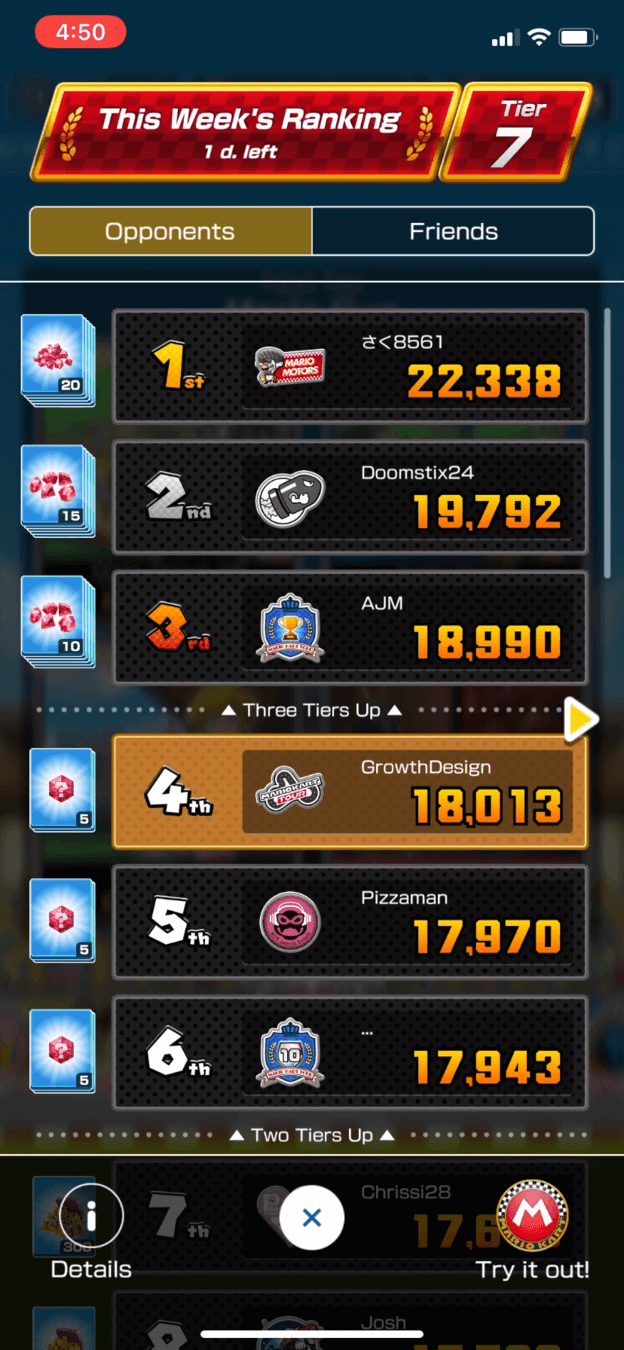
Rankings are decided by points, not by how fast you race.
'This Week's Ranking' lists opponents with odd names like Doomstix24 and AJM. After replaying the same races many times, the player sits in 4th place, roughly 4,000 points behind the top 3, without knowing who these rivals are.
TakeawayIf players cannot tell what they compete against, they cannot tell why they are losing.
Stories keep playersGames are good at drawing players into a story, which Growth.Design cites as increasing retention and engagement. Here, it is hard to understand what you are even fighting against.
Drivers 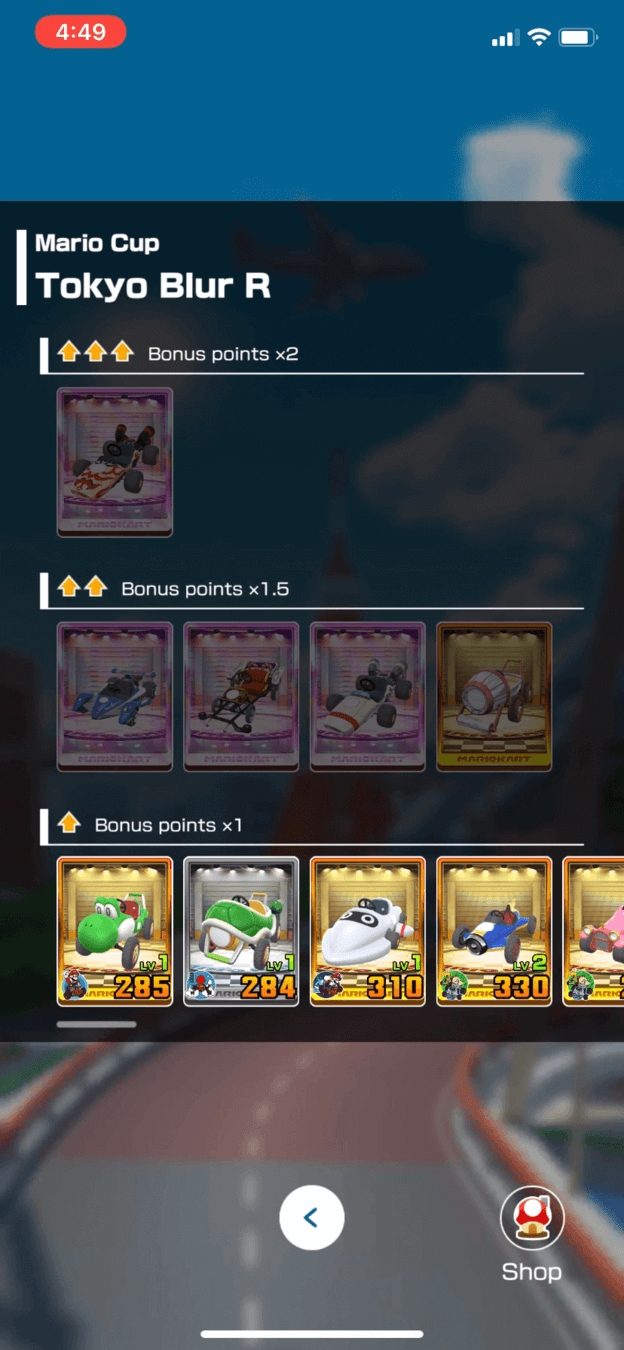 Missing driver
Karts 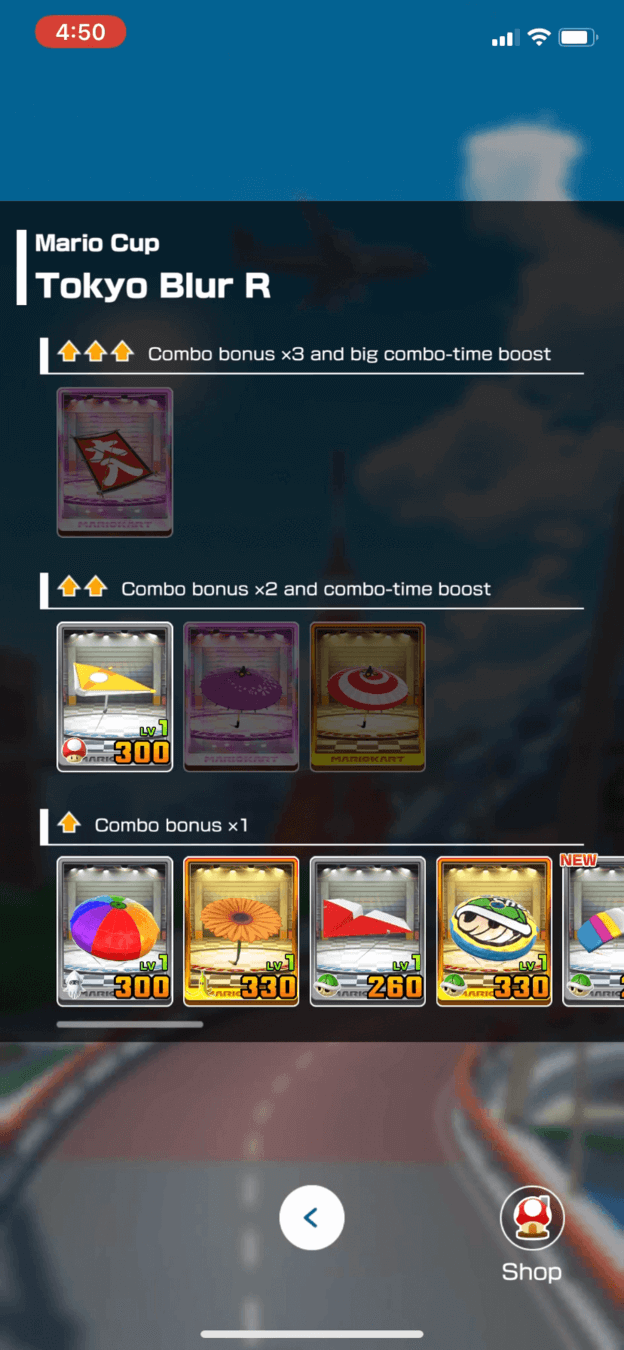 Missing kart
04
Nudge 1
Each course rewards specific drivers and karts you probably lack.
On Tokyo Blur R, the top tier slot for drivers is empty because the player does not own Peach, and the best kart slot is empty too. Without them there are no big combo bonuses, so even a first place finish scores too few points.
TakeawayWhen winning depends on owning the right items, skill stops being enough.
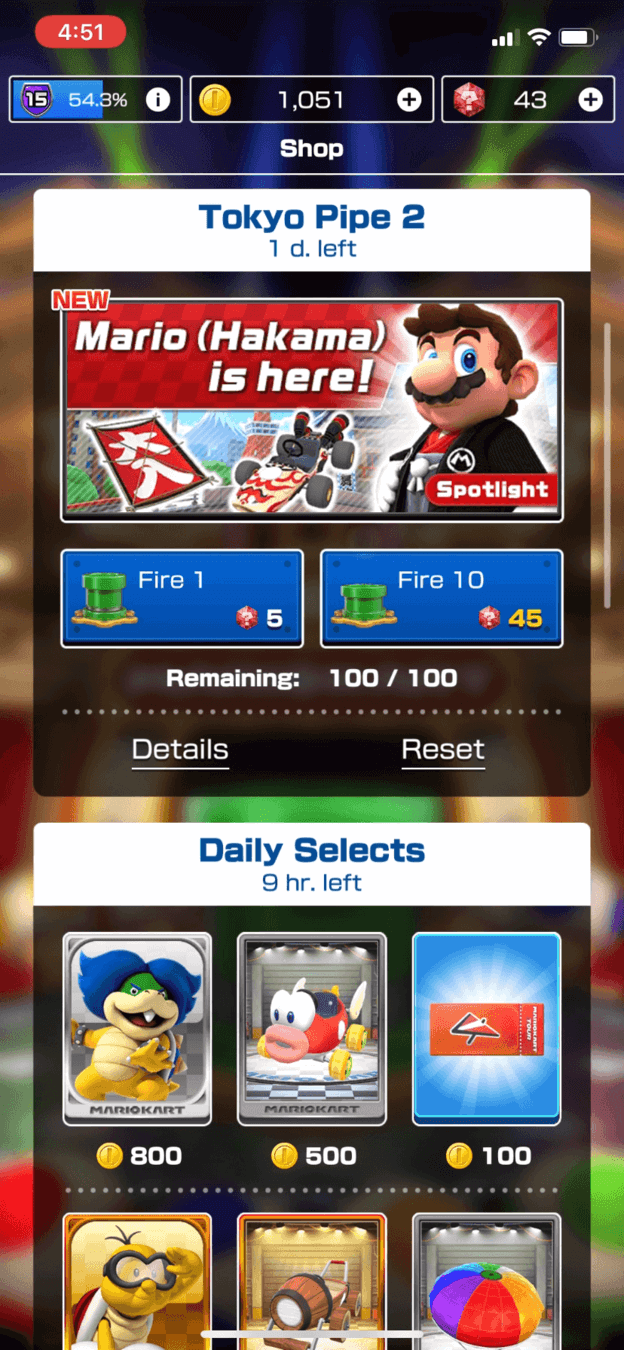 1 day left
05
Nudge 2
Tours and shop offers expire, and each needs different key drivers.
The shop announces 'NEW Mario (Hakama) is here!' with '1 d. left', and the Daily Selects run out in 9 hours. Every two weeks a new tour arrives with new favored characters, so last tour's purchases lose value.
TakeawayCountdowns make items feel valuable because they may disappear, not because they are.
ScarcityPeople value scarce things more than abundant ones. Here, limited tours and a timed shop add perceived value to items players do not necessarily need.
- Fire 10 for 45
06
Nudge 3
Onboarding teaches players that firing the pipe is fun.
To get a driver, players fire a pipe that pays out a random item: Fire 1 costs 5 rubies and Fire 10 costs 45. The tutorial has players fire it early, so by the time rubies cost money, the action already feels familiar and rewarding.
TakeawayWhat you teach in onboarding shapes the habits users bring to paid features.
ShapingShaping reinforces behaviors that move people step by step toward a target behavior. Growth.Design calls this use of it, getting players used to gambling during onboarding, a scammy one.
Odds 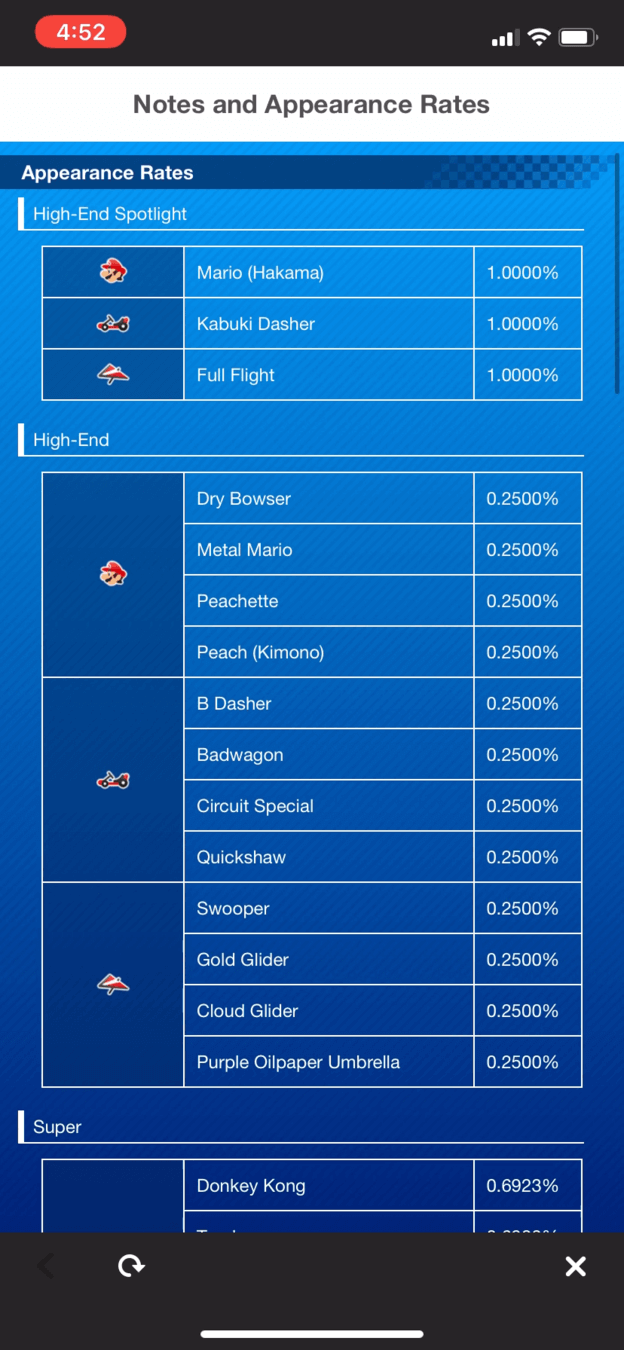 0.25 percent
Rubies 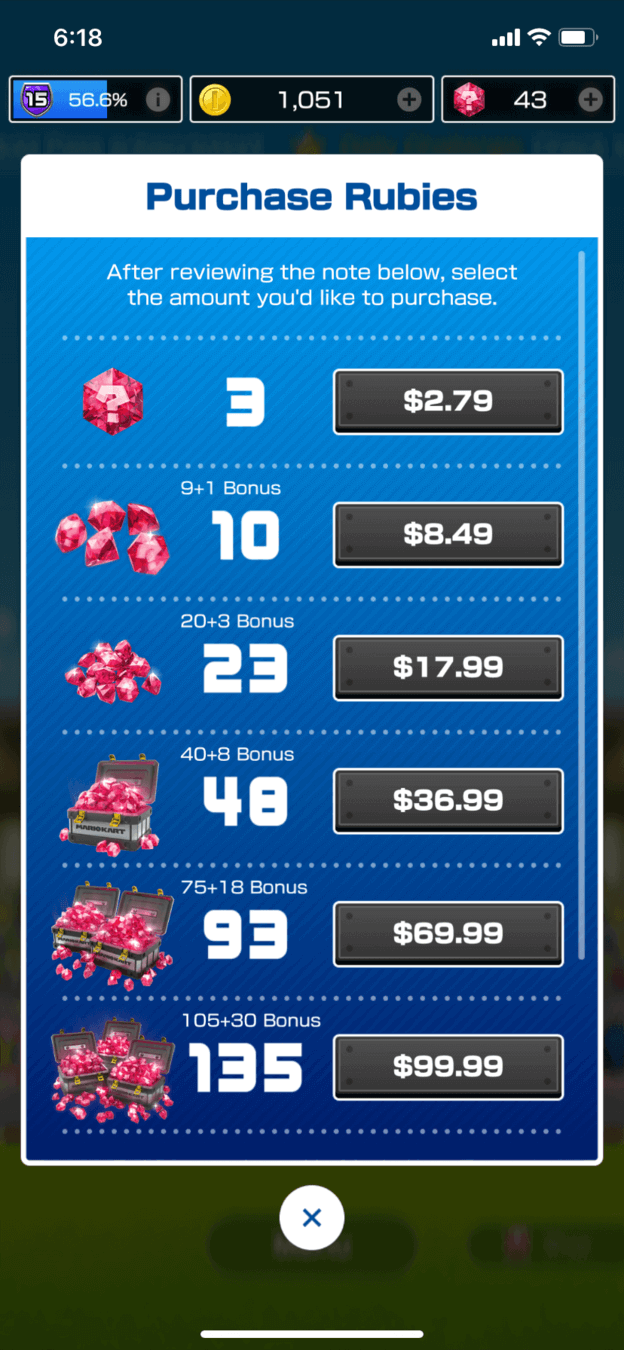 Up to 99.99 dollars
07
The real price
The odds of getting the needed driver are 0.25 percent per shot.
The 'Notes and Appearance Rates' screen lists Peach (Kimono) at 0.2500 percent, fewer than 1 in 400. Rubies sell from 2.79 dollars for 3 up to 99.99 dollars for 135. Growth.Design estimates that a guaranteed Peach would cost more than about 3,400 dollars.
TakeawayShowing the odds is a start, but tiny odds on items needed to compete are still a lottery.
Loot boxesLoot boxes are virtual rewards you pay for a chance to win. Growth.Design cites research that they generate more than 25 percent of gaming revenue by creating gambling addictions, and notes that governments are starting to regulate them under gambling law.
Daily Selects 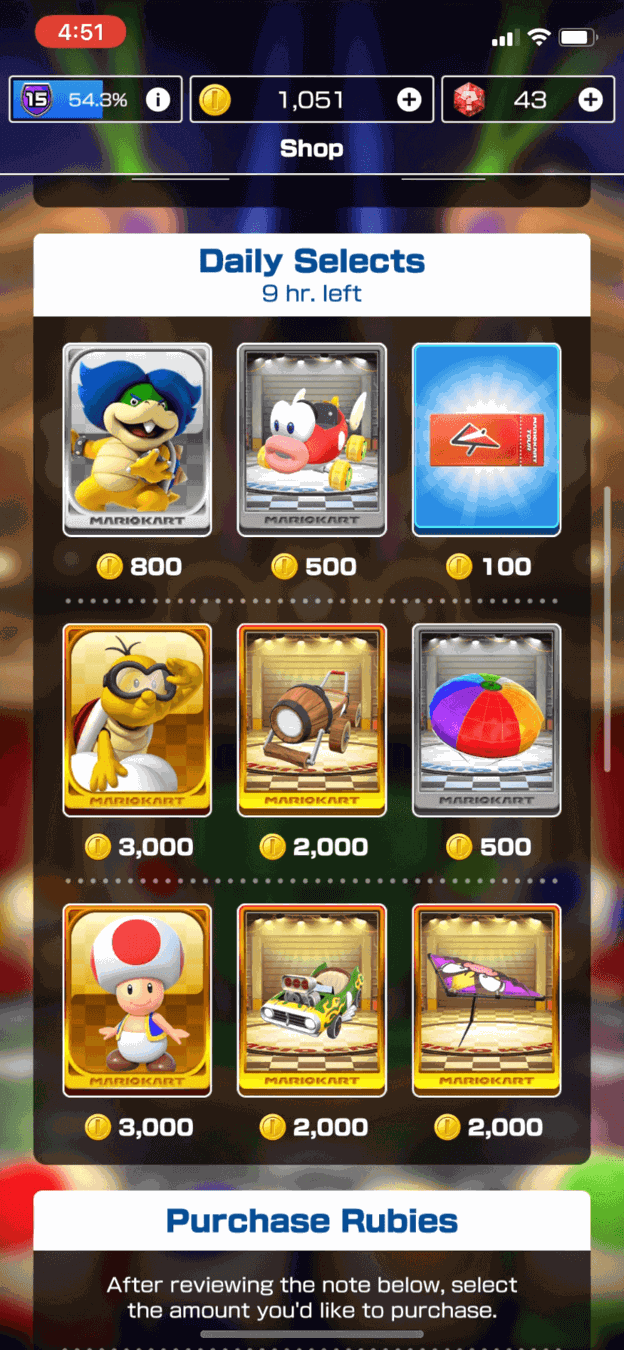 3,000 coins
Coin Rush 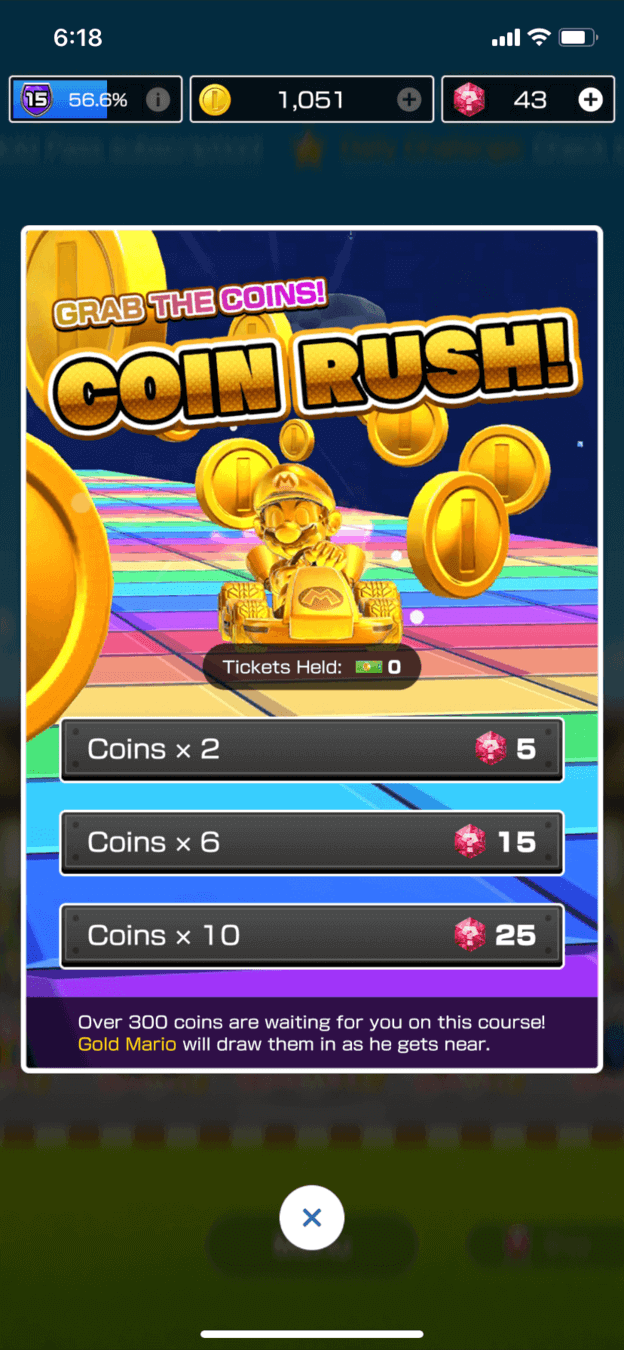 Paid in rubies
08
Nudge 4
A second currency hides what items really cost.
Toad costs 3,000 coins in Daily Selects, so the player tries Coin Rush to earn the rest. Coin Rush costs rubies: 25 for a 10x run. After some back and forth, Toad works out to about 24 dollars.
TakeawayEvery layer of currency between the price and real money makes spending harder to judge.
Hiding the value of moneyMultiple game currencies separate money from the game and leave players confused about what they spend. Growth.Design's rough estimate is 1,000 coins for about 8 dollars, a figure the game never states.
Before the race 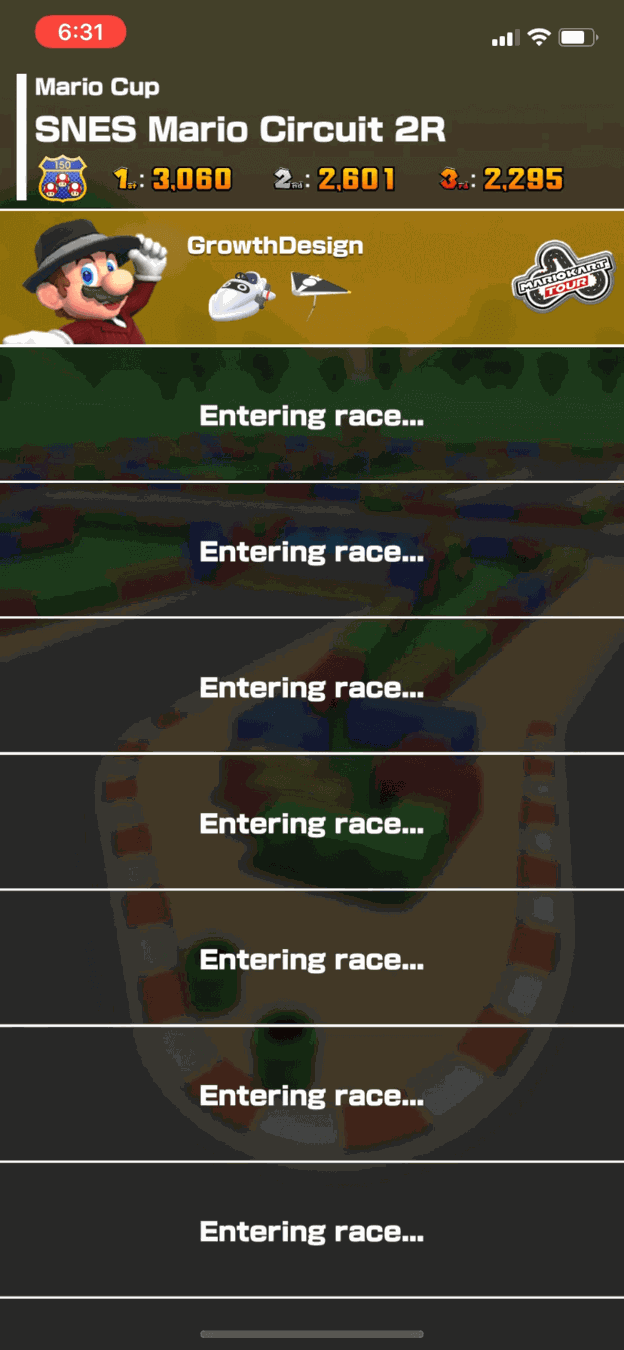 Entering race...
The racers 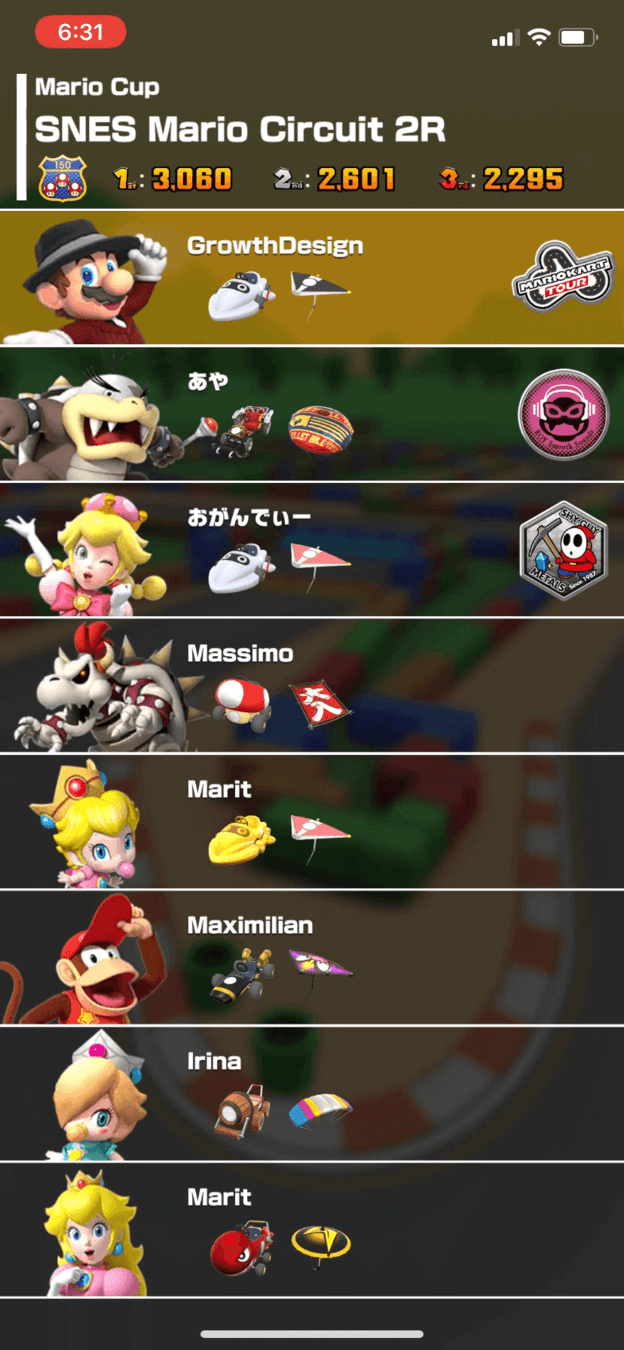 Bots with rare gear
09
Nudge 5
Racers appear to join live, but they are bots.
Each race opens with slots reading 'Entering race...' before other racers pop in, which suggests real people joining. Players found these are bots, dressed in new characters, karts and badges the player does not own.
TakeawayFake social proof may lift desire today, but it breaks trust when people find out.
Faking real playersSome argue this prepares for a multiplayer launch, but the game could simply say you race against bots. For now, it mainly makes players want the items the bots show off.
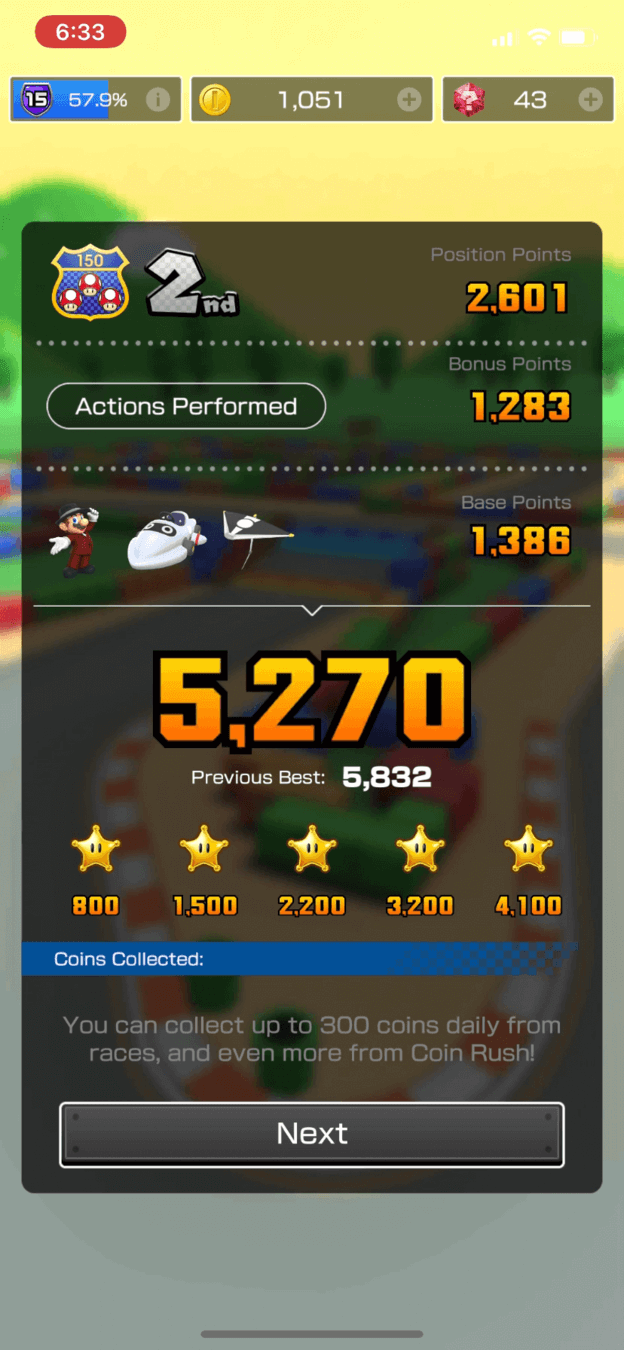 300 coin cap
10
Nudge 6
Coins from racing stop after 300 a day.
The results screen notes you can collect up to 300 coins daily from races. Even a player willing to grind cannot earn their way to new characters, karts and gliders, so rubies remain the only path.
TakeawayA hard cap on earned progress turns a free game into a pay-to-win one.
Healthy exit pointsInviting people to stop after a milestone can be healthy and even improve retention, as Growth.Design's Duolingo study shows. Here, the game does not invite you back tomorrow. It simply stops rewarding effort.
- The next tour
11
The result
Every two weeks, the game asks players to buy another lottery ticket.
Over three weeks the player went from delight to confusion to realizing the tours are built around buying rubies to gamble on items. Growth.Design gives the experience an E and asks whether it still counts as a family game when children play it.
What changed
- Show prices in real money, not only in rubies and coins
- Let skill and time unlock what money unlocks
- Label bots as bots
- Keep chance-based purchases away from what players need to compete
TakeawayA business model that needs players confused and hopeful will eventually lose them.
Every takeaway, in one place
- The setupA strong core experience earns the player's trust, which the business model can then spend or protect.
- First impressionVisual clutter can be a choice that serves the business rather than the player.
- The goalIf players cannot tell what they compete against, they cannot tell why they are losing.
- Nudge 1When winning depends on owning the right items, skill stops being enough.
- Nudge 2Countdowns make items feel valuable because they may disappear, not because they are.
- Nudge 3What you teach in onboarding shapes the habits users bring to paid features.
- The real priceShowing the odds is a start, but tiny odds on items needed to compete are still a lottery.
- Nudge 4Every layer of currency between the price and real money makes spending harder to judge.
- Nudge 5Fake social proof may lift desire today, but it breaks trust when people find out.
- Nudge 6A hard cap on earned progress turns a free game into a pay-to-win one.
- The resultA business model that needs players confused and hopeful will eventually lose them.
Source: Growth.Design: 6 Ways Mario Kart Tour Triggers You Into Gambling Your Money
Build a revenue model players and parents can trust.
Monetization that depends on confusion and chance tends to earn short-term revenue and long-term resentment, and it now draws regulators' attention. Zyxware can review your pricing, currencies and progression, and help design paid features whose value people understand before they pay.