Why False Stories Spread on Facebook, and One Small Fix
 +20 XP
Case study
Why False Stories Spread on Facebook, and One Small Fix
A scroll through a Facebook feed during an election shows how the product's own design helps false stories travel: ranking, targeting, one tap sharing, visible share counts and unclear rules. You will learn the five forces behind it and how a small prompt to read before sharing slows it down.
+20 XP when you reach the endWhat you will learn
- Name the five forces that help misinformation spread
- See how one tap sharing leads to blind sharing
- Use deliberate friction to encourage better behavior
Scroll to follow the story. The screen changes with you.
Based on the learnings from Growth.Design: The Psychology of Misinformation on Facebook, presented in our own format.
Step 1 of 10
- Breaking, or not
01
The setup
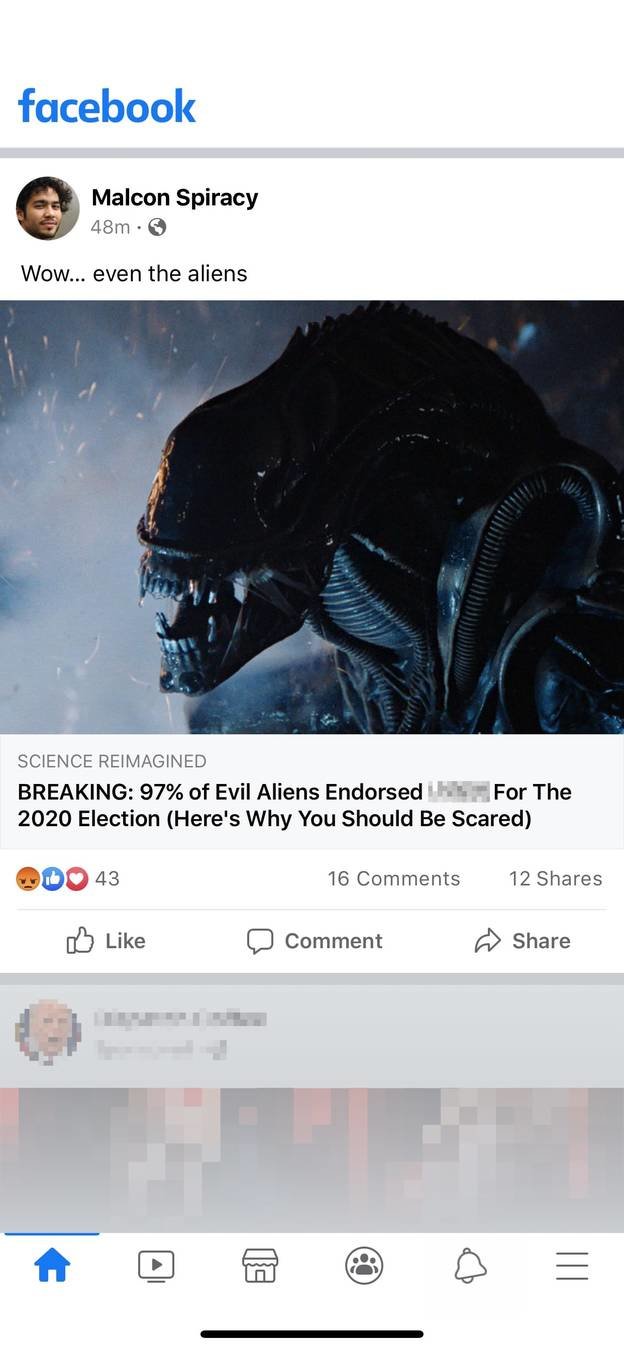
An ordinary scroll through the feed shows how easily false stories slip in.
A friend shares a 'breaking' story claiming aliens have endorsed a candidate. It looks like any other post: a bold headline, a dramatic image, reactions and shares. Growth.Design notes that misinformation on Facebook has tripled since 2016, and groups the causes into five forces: algorithm, availability, ability, amplification and ambiguity.
TakeawayMisinformation spreads through the same design patterns as everything else in the feed.
- Built to provoke
02
Force 1: algorithm
The feed is ranked for engagement, and strong emotions drive engagement.
People interact more with content that makes them afraid, disgusted or angry. A ranking system tuned for interaction pushes those posts higher, whether or not they are true. And when people feel strongly, critical thinking drops down the list.
TakeawayWhatever your ranking rewards, your feed will produce more of.
False stories travel fasterGrowth.Design cites a 2018 MIT study on the spread of false news, which found that false stories travel about six times faster than true ones on social media.
 Sponsored ad
03
Force 2: availability
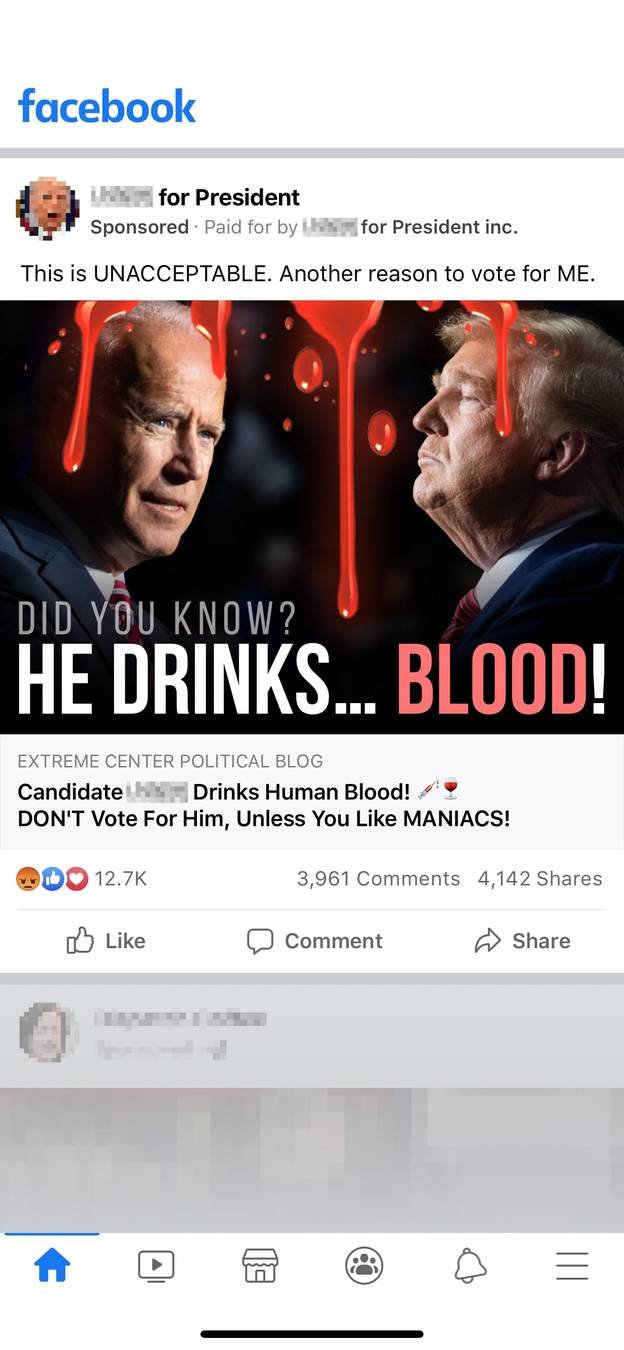
Paid political ads put shocking claims in front of people who already agree.
A sponsored post from a campaign claims the rival candidate drinks blood. Facebook knows each person's political views, so the ad is shown to people most likely to believe it. Our brains welcome information that confirms what we already think.
TakeawayTargeting that only confirms beliefs makes weak claims feel credible.
Confirmation biasPeople search for, interpret and remember information in a way that supports what they already believe. When a platform optimizes for what people want to see, it creates what experts call filter bubbles.
- One tap share
04
Force 3: ability
One tap on Share is all it takes to pass the claim on.
The feed is designed for interaction, so the Share button sits right under the headline. Anyone can amplify a message without opening the article, and many do exactly that.
TakeawayMaking an action effortless also makes it thoughtless.
Blind sharingGrowth.Design cites a Columbia University study, reported by The Independent, finding that 59 percent of links shared on social media are never read first. It calls this a second order effect: prompting shares leads to more blind shares, just as encouraging likes leads to social pressure.
- Social proof
05
Force 4: amplification
Thousands of visible shares make the next person more likely to share too.
The ad shows 12.7K reactions, 3,961 comments and 4,142 shares. Big numbers signal that many people have endorsed the post, and each new share makes the next one more likely.
TakeawayPublic counts turn popularity into a signal of truth, even when it is not.
Bandwagon effectThe rate at which a trend grows increases with the number of people who have already adopted it.
 Politicians exempt
06
Force 5: ambiguity
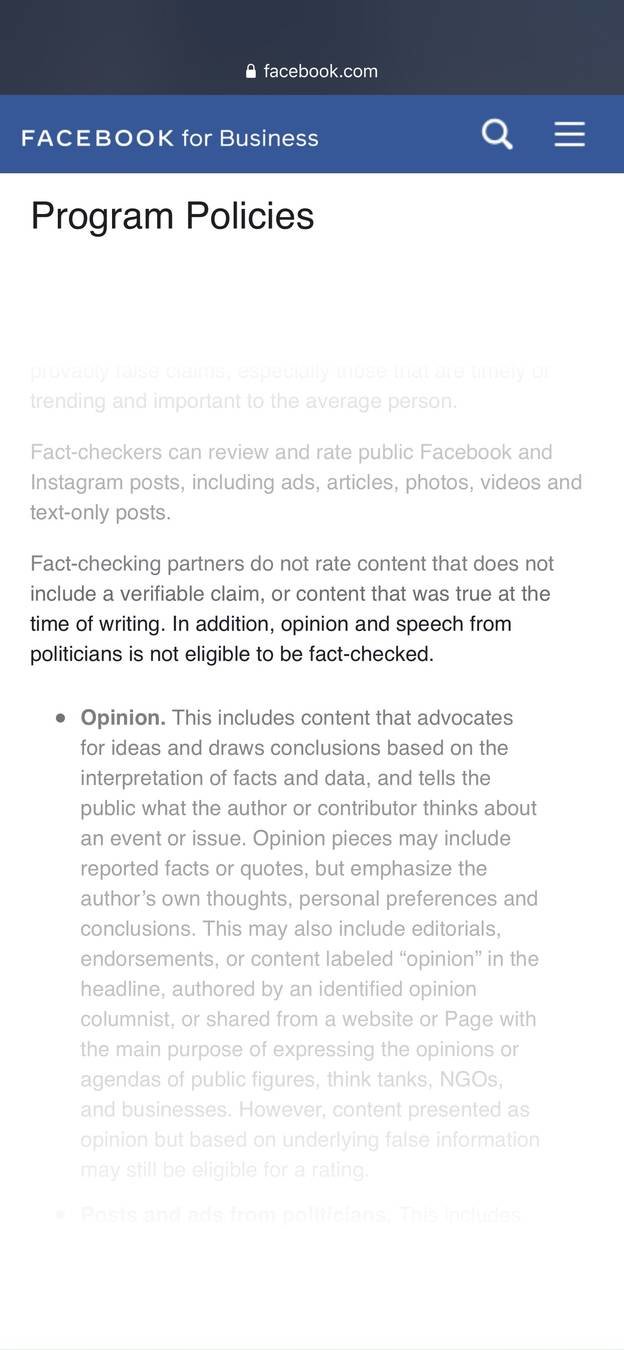
The rules say ads from politicians are not fact checked.
Growth.Design notes that independent fact checkers had reviewed 150 million Facebook posts. But Facebook's program policies state that opinion and speech from politicians is not eligible for fact checking, so a claim like the blood ad would be allowed to run.
TakeawayUnclear or uneven rules leave room for the most extreme content.
 Spread anyway
07
Why removal is hard
Taking content down can make it spread even further.
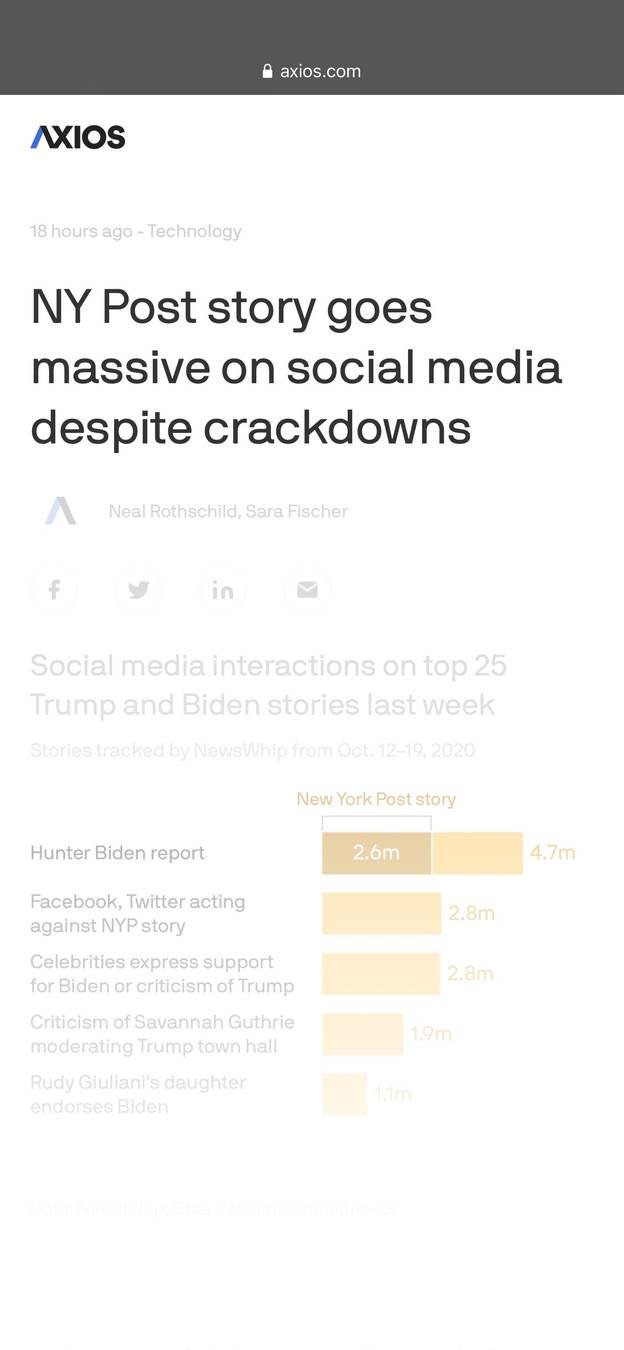
An Axios headline reports that a New York Post story went massive on social media despite crackdowns. Censorship is a slippery slope: people do not want Facebook deciding what is true, and Facebook does not want that liability either.
TakeawayBlocking content is a blunt tool; changing behavior at the moment of sharing is often better.
Streisand effectTrying to suppress information can publicize it further. Growth.Design cites Axios: in October 2020, Twitter's censorship of the New York Post article roughly doubled its reach.
Today Instant shareRedesign 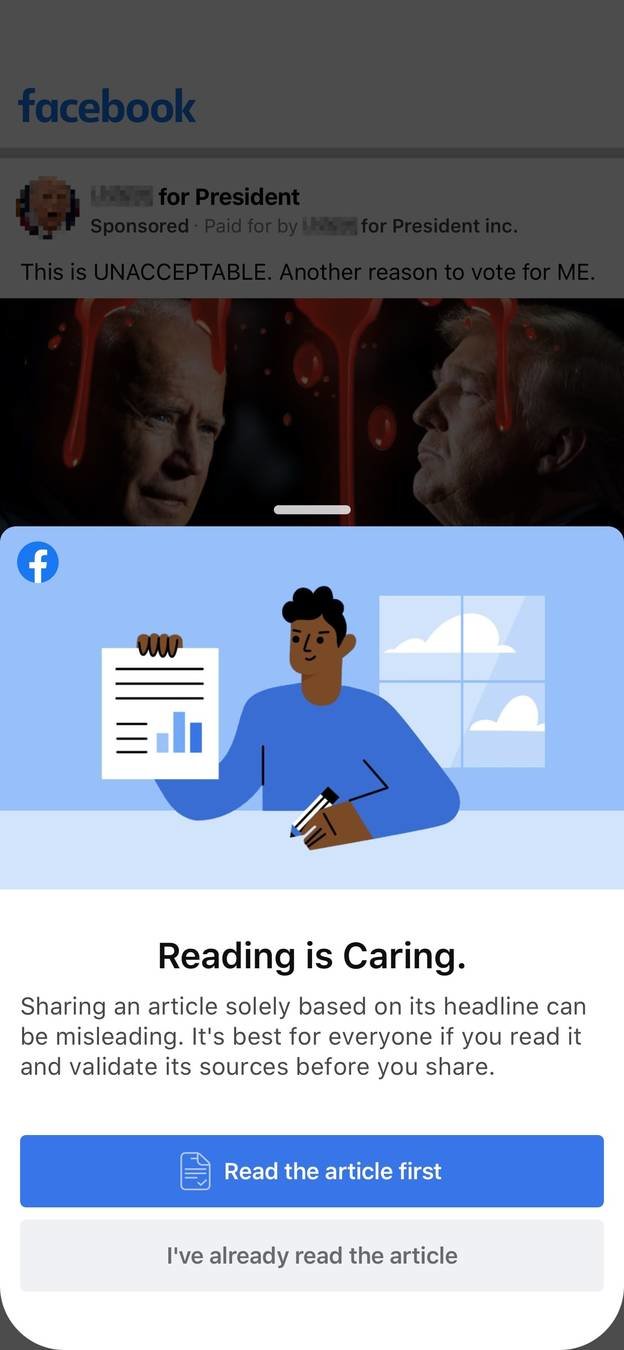 Read first
08
A proposed fix
When someone shares without opening the link, ask them to read it first.
Growth.Design's redesign adds a sheet titled 'Reading is Caring' when a person taps Share on an article they have not opened. It explains that headlines alone can mislead, offers 'Read the article first', and still allows sharing. Adding friction may seem against Facebook's interests, but Instagram's 'You're All Caught Up' shows large platforms will do it.
What changed
- A prompt appears only when the link was not opened
- The main button opens the article
- A secondary option lets people who read it share anyway
TakeawayA small, respectful pause can change behavior without taking away choice.
Using data for goodFacebook already tracks whether and how long you read an article, mostly for advertising. A Forbes editor suggested using it this way in 2017, and the media literacy project ThinkFirst News has pushed a similar idea.
 Slower sharing
09
The impact
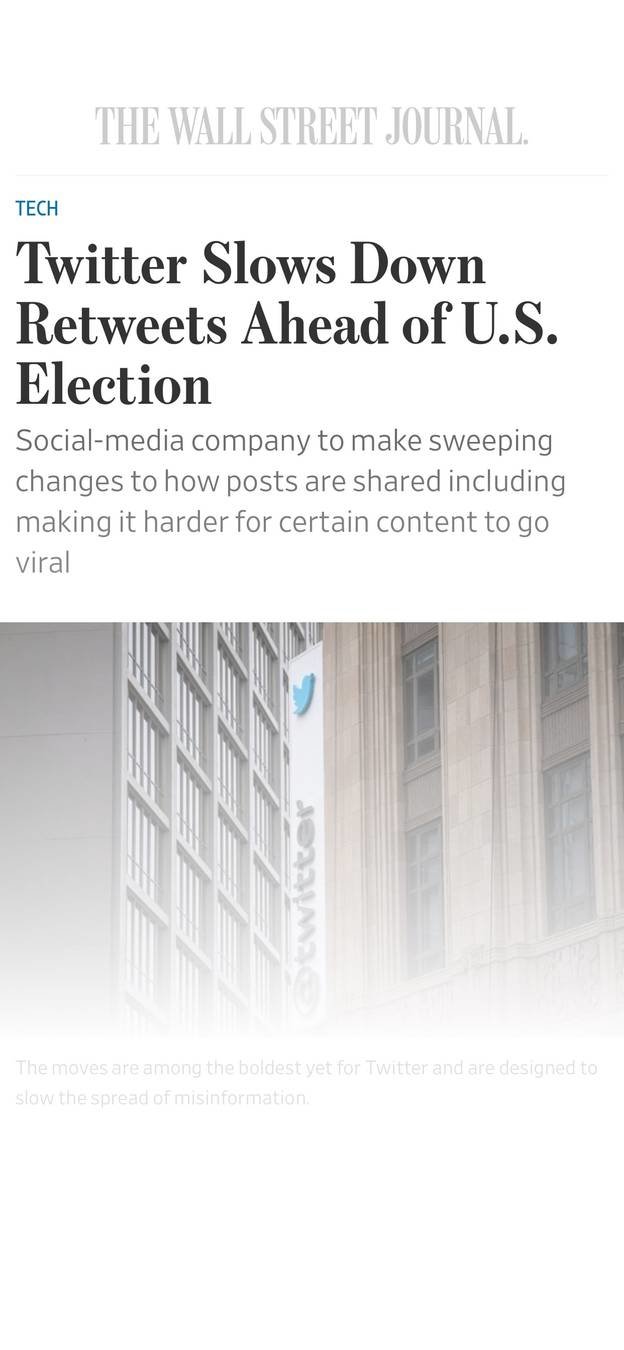
Between drafting and publishing this study, Twitter shipped a similar change.
The Wall Street Journal reported that Twitter was slowing down retweets ahead of the US election, with sweeping changes to how posts are shared to make it harder for some content to go viral.
TakeawayFriction at the moment of sharing is a practical tool platforms can adopt.
 Read it first
10
The result
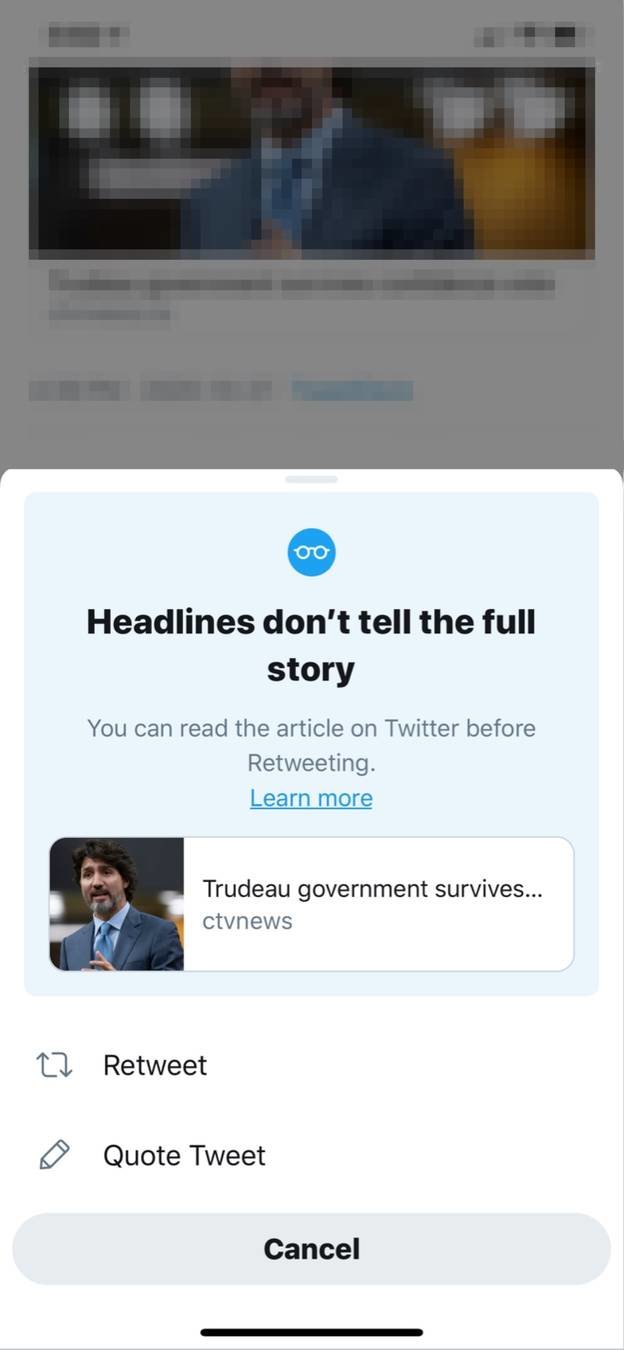
A 'Headlines don't tell the full story' prompt led more people to open articles.
Before a retweet, Twitter shows the prompt with the article preview and a link to read it. Growth.Design reports that in Twitter's tests, 33 percent more people opened an article before retweeting it, which means less blind sharing and less misinformation reaching millions.
TakeawayProduct teams are responsible for the behavior their designs encourage.
Every takeaway, in one place
- The setupMisinformation spreads through the same design patterns as everything else in the feed.
- Force 1: algorithmWhatever your ranking rewards, your feed will produce more of.
- Force 2: availabilityTargeting that only confirms beliefs makes weak claims feel credible.
- Force 3: abilityMaking an action effortless also makes it thoughtless.
- Force 4: amplificationPublic counts turn popularity into a signal of truth, even when it is not.
- Force 5: ambiguityUnclear or uneven rules leave room for the most extreme content.
- Why removal is hardBlocking content is a blunt tool; changing behavior at the moment of sharing is often better.
- A proposed fixA small, respectful pause can change behavior without taking away choice.
- The impactFriction at the moment of sharing is a practical tool platforms can adopt.
- The resultProduct teams are responsible for the behavior their designs encourage.
Source: Growth.Design: The Psychology of Misinformation on Facebook
Design for the behavior you want to see.
Engagement metrics can reward the wrong actions. Zyxware can review how your sharing, ranking and publishing flows shape what people do, and design small, testable checkpoints that protect users and your platform without killing engagement.