How Generic Search Pushed an Airbnb Regular to Book Elsewhere
 +20 XP
Case study
How Generic Search Pushed an Airbnb Regular to Book Elsewhere
A frequent traveler working from a Lisbon coffee shop needs a last-minute place in Porto, opens Airbnb, and ends up booking through Google Maps. Follow the search step by step to learn where personalization would have kept him, and why more filters are not the answer.
+20 XP when you reach the endWhat you will learn
- Use location and past searches to set smart defaults
- Nudge people toward filters instead of forcing them
- Serve the job behind a feature, not just the feature
Scroll to follow the story. The screen changes with you.
Based on the learnings from Growth.Design: Airbnb: How To Reduce Churn With Personalization, presented in our own format.
Step 1 of 9
- Why Kuala Lumpur?
01
The setup
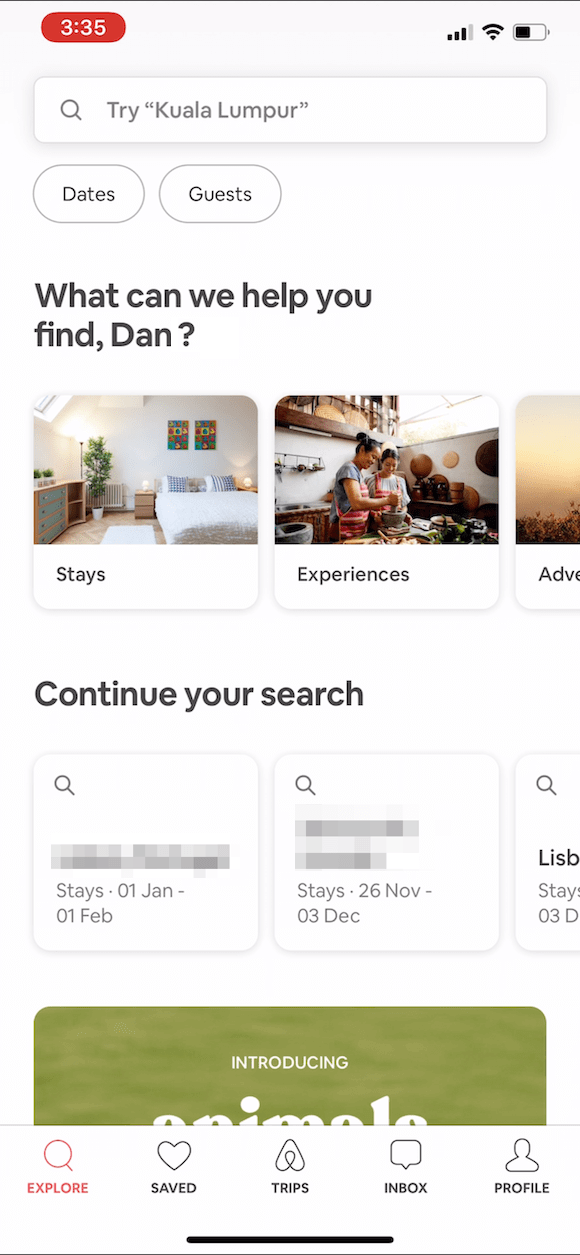
Airbnb greets him by name, then suggests Kuala Lumpur.
He is in Lisbon and must book a place in Porto for a last-minute event. The home screen asks 'What can we help you find, Dan?', which feels friendly, and shortcuts to recent searches are handy. But the search field is low contrast, and its placeholder suggests Kuala Lumpur, a 16 hour flight away.
TakeawayA personal greeting sets an expectation that the rest of the screen must meet.
Location personalizationAirbnb can tell he is using the app outside his home country, Canada. Suggesting nearby cities instead of random ones would make the app feel aware of his context and would likely shorten the time to a first successful search. Growth.Design cites a 2019 geo personalization A/B test by Conversion XL.
 A reason to filter
02
A good start
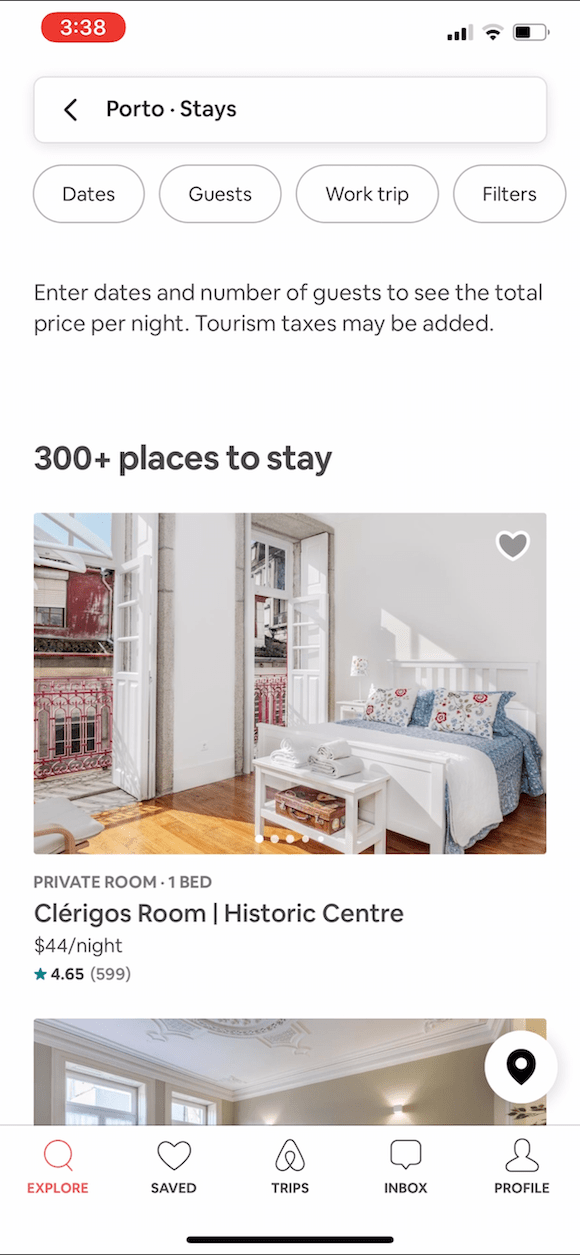
Searching Porto shows 300+ places before asking for anything.
Instead of forcing dates and guests first, the app shows listings right away. A short line explains why he should add dates and guests: to see the total price per night. The chips across the top invite him to refine, without blocking him.
TakeawayShow useful results first, then give people a reason to refine them.
Nudge, do not pushNudge people toward the right step before forcing it. Two things matter for filters: people must see the benefit quickly, and the default results must already be useful. Growth.Design cites the Hopper blog: users do not want more filters, they want better results.
 Two adults, again
03
Problem 1
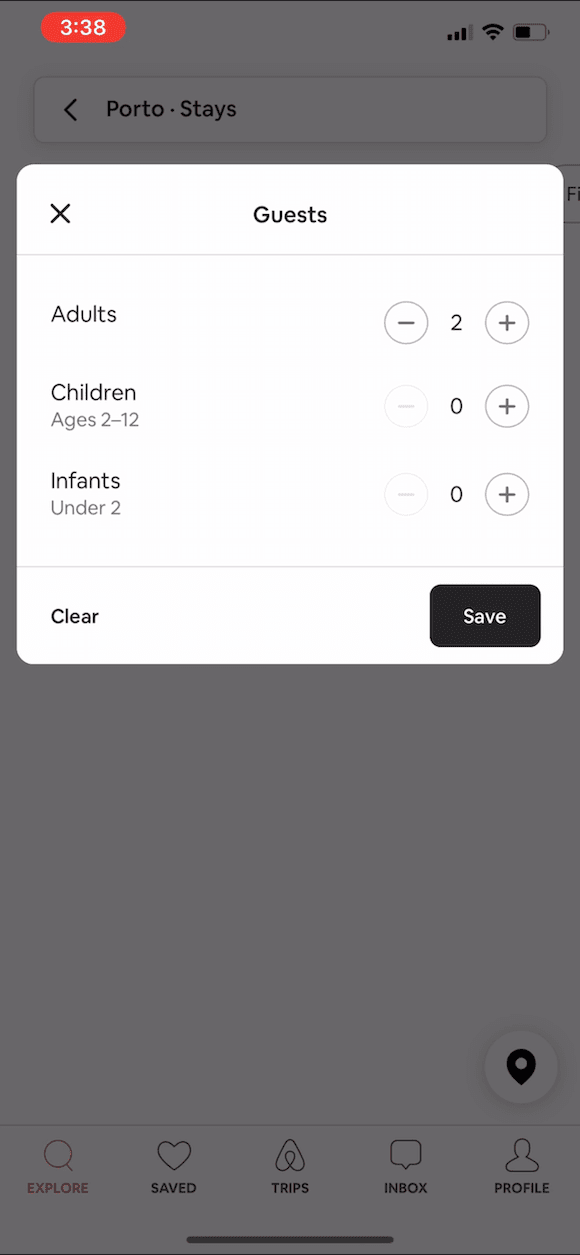
The guests picker ignores years of his booking history.
The dates picker is standard. The guests picker asks him to set two adults again, as it does every time. It also cannot tell a trip with his girlfriend, where they want one bed, from a business trip with a cofounder, where they need two.
TakeawayIf the answer is nearly always the same, make it the default.
Usage based personalizationAbout 95 percent of his roughly 200 previous Airbnb searches were for two adults, with clear patterns such as a strong preference for a king-size bed. Using past search patterns to suggest default filters would save time and could raise conversion.
 Who is this for?
04
Problem 2
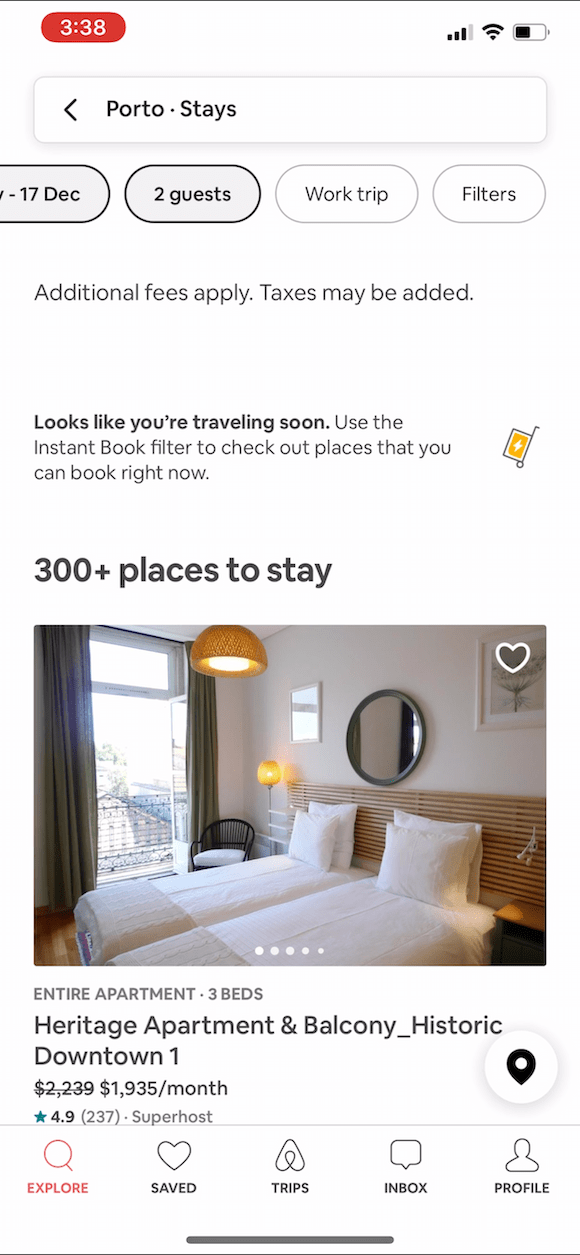
A 'Work trip' filter sounds right, but nobody explains who it is for.
The 'Work trip' chip looks relevant, but the description talks about business travelers and 5-star ratings. He cannot tell if it means digital nomads in coworking spaces or corporate suits, so he skips it. The Instant Book nudge that follows, 'Looks like you're traveling soon', is well played.
TakeawayWhen people cannot picture the outcome, they leave the option alone.
Status quo biasWhen in doubt, people do not act unless they understand exactly what will happen. Photos or illustrations help clarify the context. Growth.Design points to Google Trends data from 2019 showing sharply rising interest in 'digital nomad', an opportunity for Airbnb.
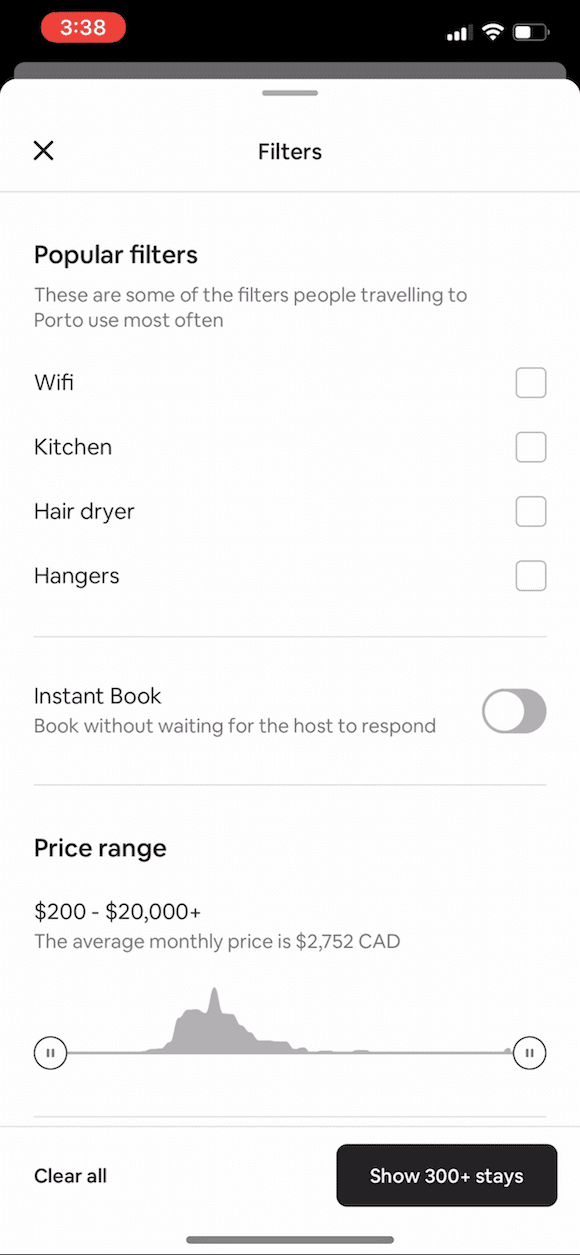 Hair dryer?
05
Problem 3
'Popular filters' offers hair dryer and hangers.
The filter sheet opens with filters that people traveling to Porto use most. Wifi and Kitchen make sense, but Hair dryer and Hangers are options he and his girlfriend have not considered once in five years. Instant Book sits just below, as promised.
TakeawayPopular choices only help when they are popular with people like this user.
Social proof pitfallsPeople tend to accept the actions of others as correct. But when 'popular filters' are not personalized, they backfire and make users doubt the relevance of every other suggestion.
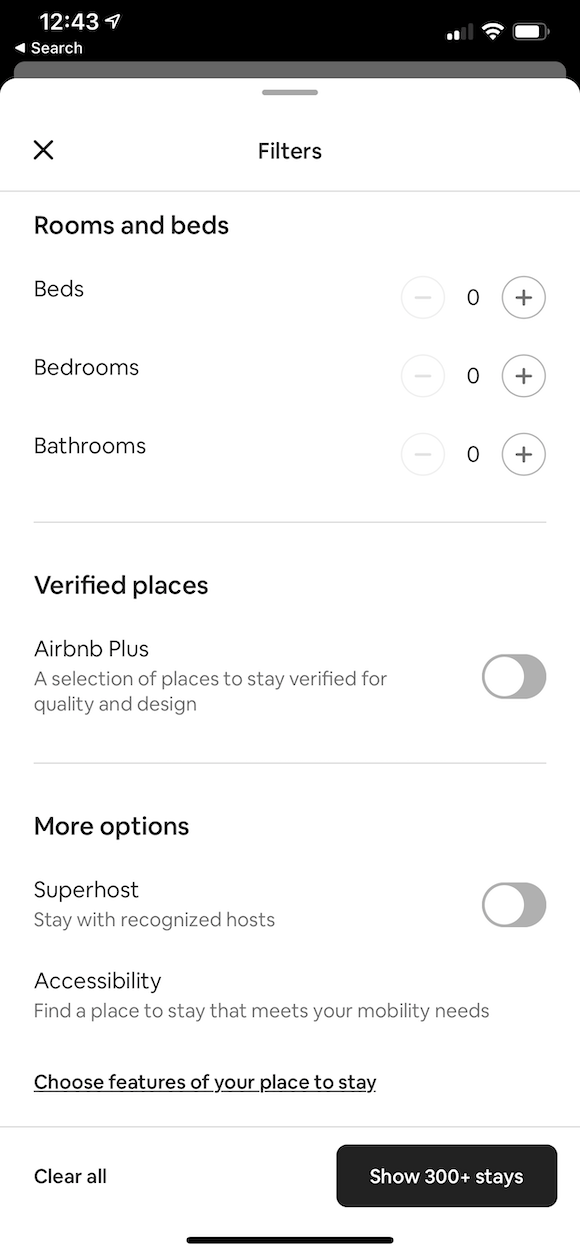 Count, not size
06
Problem 4
He can filter by number of beds, but not by bed size.
Rooms and beds offers counters for beds, bedrooms and bathrooms. At six foot three he needs a large bed, and large beds are rare in Portugal. There is no way to ask for one, and the app does not remember his preferences between searches, so he re-enters the same filters every time.
TakeawayFilters should match the decisions people actually make, and remember them.
Customization versus personalizationCustomization means people choose between options themselves, which takes effort. Personalization means anticipating their needs and showing a relevant experience automatically. Google Maps does this with a 'Match Score' for restaurants based on past behavior. Growth.Design cites ConversionXL and Mashable, and sees the same opportunity for places to stay.
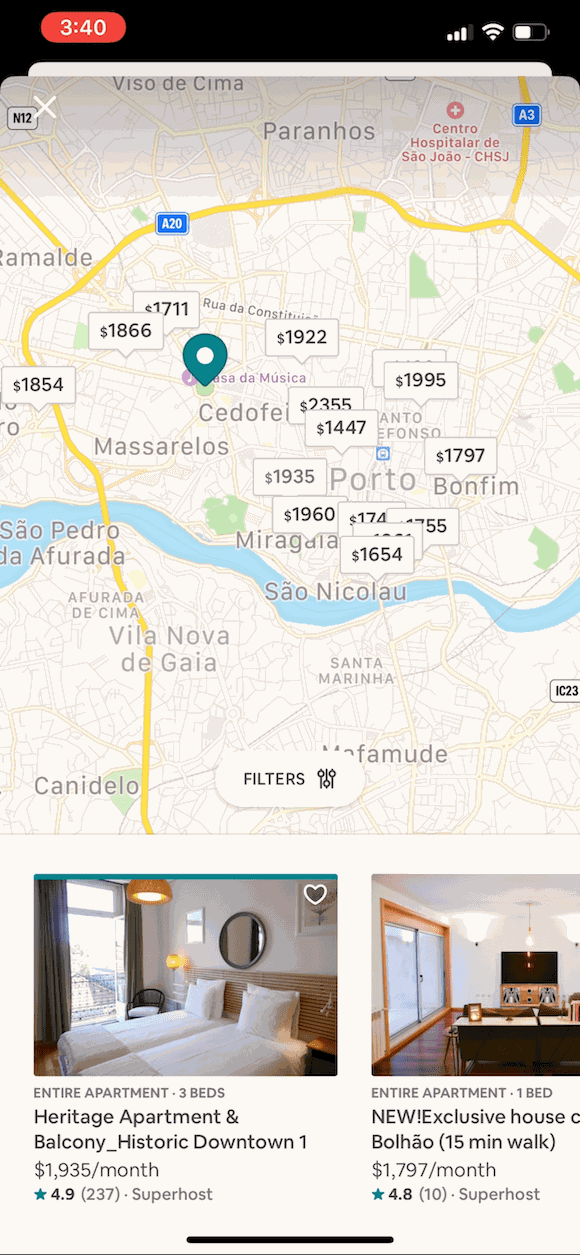 What is nearby?
07
Problem 5
The map shows prices, but not whether a place is worth staying near.
Location matters to him: he wants to walk to restaurants and coworking spaces instead of spending hours commuting each week. Airbnb's map shows price pins across Porto, including a default suggestion that looks isolated, with no hint of what is around each listing.
TakeawayA map feature is not the same as helping people choose a good area.
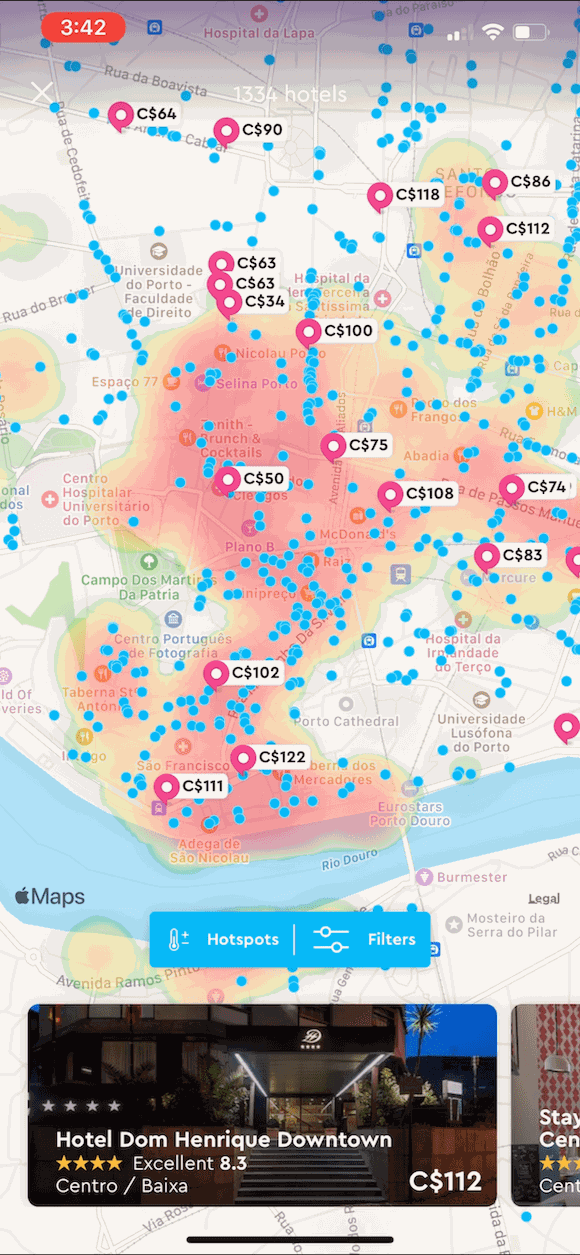 Where to stay
08
The workaround
He switches to Momondo to see where he should stay.
Momondo's Hotspots feature shades the busiest areas for eating, sightseeing, shopping and nightlife, based on what locals and travelers like. In seconds he knows which neighborhoods to aim for. But it is another app, and another booking service.
TakeawayWhen your product skips the underlying need, people find a competitor that meets it.
Feature versus job to be doneThe job behind Airbnb's map is roughly: when I choose a place to stay, I want to be near what matters to me so I can save time and enjoy my trip. Growth.Design cites Lean Methods on jobs to be done. Failing that job sends users to other apps, which is risky when those apps also sell bookings.
 Booked here
09
The result
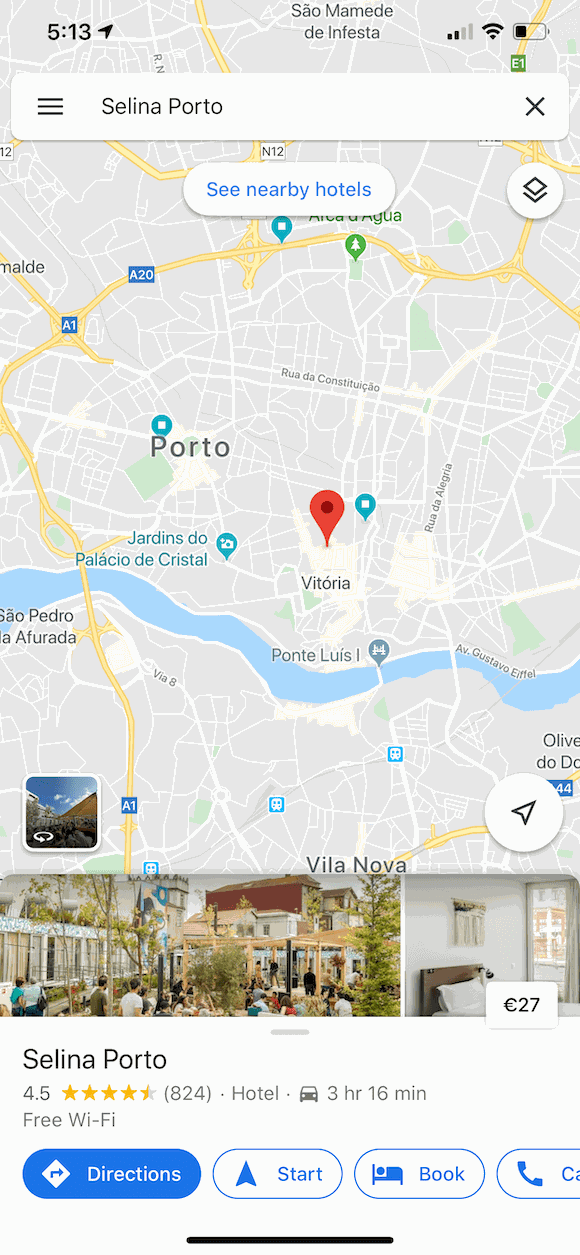
In Google Maps, a well-rated coliving space at 27 euros a night wins.
To check the exact spot, he opens a third app. His saved places show Selina Porto, a coworking and coliving space he likes, rated 4.5 and listed at 27 euros a night, with a Book button right there. Tired of searching, he books it, not through Airbnb. Growth.Design scores the booking experience a C.
TakeawayEvery extra app a user needs is a chance for them to book somewhere else.
Hick's LawThe time to make a decision grows with the number and complexity of choices. After endless options in Airbnb, one well-rated, affordable result in Google Maps looked like the better choice. That contrast is why personalization is so powerful.
Every takeaway, in one place
- The setupA personal greeting sets an expectation that the rest of the screen must meet.
- A good startShow useful results first, then give people a reason to refine them.
- Problem 1If the answer is nearly always the same, make it the default.
- Problem 2When people cannot picture the outcome, they leave the option alone.
- Problem 3Popular choices only help when they are popular with people like this user.
- Problem 4Filters should match the decisions people actually make, and remember them.
- Problem 5A map feature is not the same as helping people choose a good area.
- The workaroundWhen your product skips the underlying need, people find a competitor that meets it.
- The resultEvery extra app a user needs is a chance for them to book somewhere else.
Source: Growth.Design: Airbnb: How To Reduce Churn With Personalization
Turn the data you already have into shorter journeys.
Most products already know enough about their users to skip half of the questions they ask. Zyxware can review your search and discovery flows, find where people fall back on other tools, and design personalized defaults that respect privacy and save time.